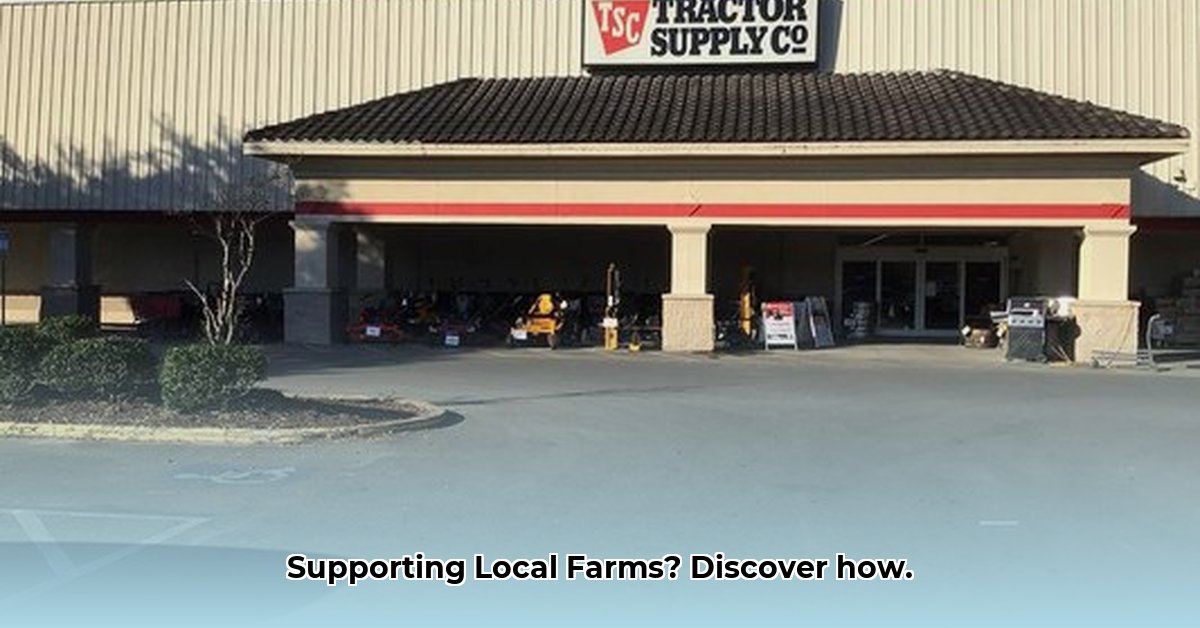
Tractor Supply (TSC) in Branford, Florida, serves as a vital resource for local farmers and gardeners. But how effectively does this retail giant contribute to sustainable agriculture in the community? This article explores TSC's role, the challenges in assessing its impact, and actionable steps to foster a more sustainable future. We'll examine their product offerings, the complexities of supply chain transparency, and the importance of informed consumer choices. For more information on other TSC locations, check out this nearby store.
TSC's Product Offering & Local Context
The Branford TSC store offers a broad range of products relevant to both large-scale farming and home gardening. Beyond traditional farming equipment, they stock items directly supporting sustainable practices. Organic seeds, water-efficient irrigation systems, and even compost bins are readily available, catering to the growing demand for environmentally conscious agriculture in the community. This accessibility empowers local residents to engage in sustainable farming practices, contributing to community food security and self-reliance. But how does this translate to broader sustainability?
The Challenges of Assessing Sustainability
While TSC provides access to sustainable products, measuring its overall impact is complex. Data transparency regarding the sourcing of products remains a hurdle. Are the seeds non-GMO? Are the fertilizers organically produced? These questions are crucial for assessing the true environmental footprint of TSC's offerings. Furthermore, consumer choices play a significant role. Even with sustainable options available, the actual demand for these products shapes their impact. The interplay between supply chain practices and consumer behavior complicates the narrative of TSC's contribution to local sustainability. A deeper investigation is needed.
Actionable Steps and Potential Pathways
To enhance TSC's role in fostering sustainable agriculture in Branford, a collaborative effort is crucial:
1. Tractor Supply Branford:
- Short-Term (1 year): Implement clear and consistent labeling on products highlighting sustainable certifications (e.g., organic, non-GMO). Conduct a comprehensive review of their inventory, prioritizing sustainable options where feasible.
- Long-Term (3-5 years): Partner with local agricultural organizations to sponsor workshops and educational events promoting sustainable farming methods. Actively seek out and source more locally produced, sustainably certified products.
2. Local Farmers and Gardeners:
- Short-Term: Actively choose sustainable options available at TSC. Share knowledge and best practices within the community.
- Long-Term: Advocate for policies supporting local and sustainable agriculture. Collaborate with TSC to identify and address any gaps in sustainable product offerings.
3. The Branford Community:
- Short-Term: Increase community awareness of the importance of sustainable agriculture through educational campaigns and community events.
- Long-Term: Support local initiatives promoting sustainable food systems. Advocate for policies that reward sustainable farming practices.
4. Tractor Supply Corporate:
- Short-Term: Implement a transparent sustainability reporting system, publicly disclosing data on the environmental impact of their supply chain and products.
- Long-Term: Invest in research and development to identify and offer a wider range of eco-friendly products. Establish clearer, measurable goals for sustainable sourcing.
Conclusion: A Collaborative Harvest
Tractor Supply Branford holds significant potential to be a driving force in promoting sustainable agriculture within the community. However, realizing this potential hinges on transparency, accountability, and a shared commitment from all stakeholders. By working together – TSC, local farmers, the community, and TSC Corporate – we can cultivate a more sustainable and resilient agricultural ecosystem in Branford. The journey requires ongoing effort, but the potential rewards for the community and the environment are immense.